News & Information
Articles
The Visibility Gap
The Visibility Gap
Why Business Owners Can't Afford to Be Invisible on LinkedIn
By Jesus Salazar | April 2026
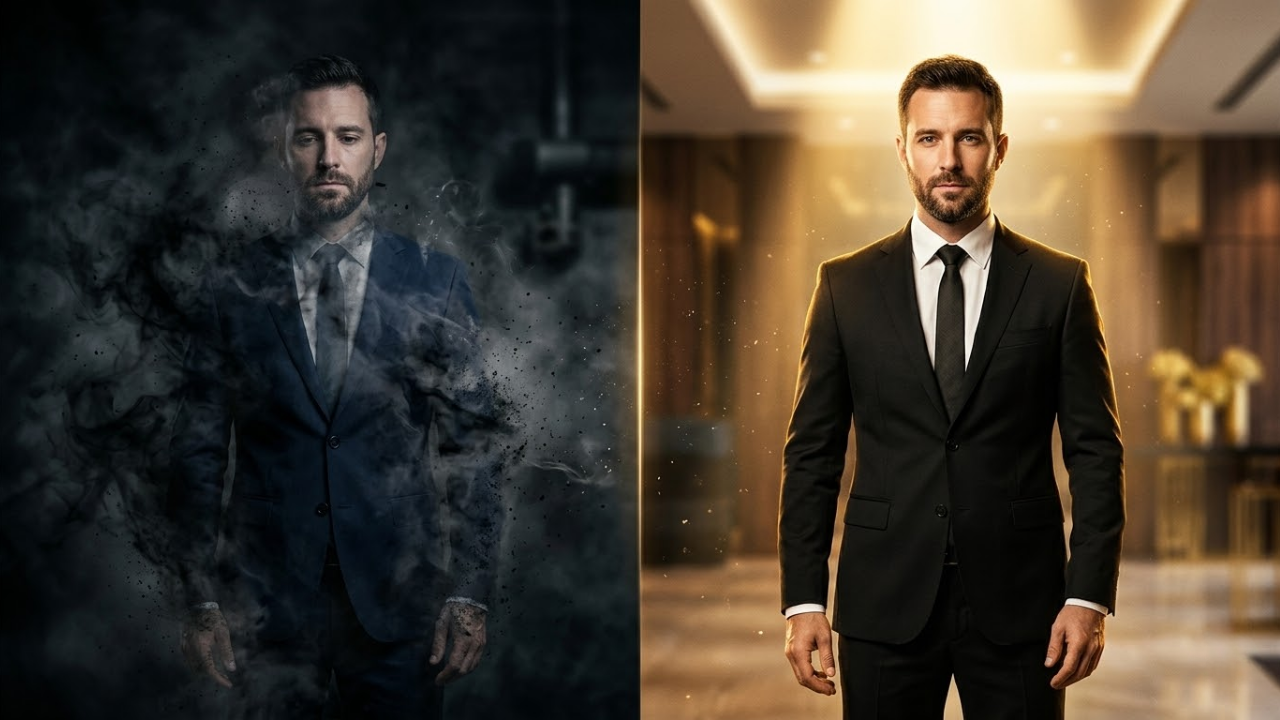
Imagine the most qualified person in the room.
The one who has built something real. Who has made hard decisions, survived setbacks, and earned their expertise through years of work.
Now imagine that person is completely invisible online.
No presence.
No voice.
No signal that they even exist.
That person loses business every single day, not because they lack value, but because no one knows they're there.
Here's the uncomfortable truth:
That person might be you.
Leadership has always required visibility.
Not visibility for applause, but visibility for alignment.
For decades, that visibility happened inside conference rooms, industry events, and board meetings.
Today, much of that visibility happens somewhere else.
It happens on LinkedIn.
Yet many business owners still treat LinkedIn as if it were a digital résumé or a place to occasionally announce company news. Profiles sit dormant. Posts are rare.
The voice of the business owner, the one person who carries the clearest vision of the company, is largely absent.
In a world where trust increasingly begins online, invisibility is no longer neutral.
It's strategic silence.
And silence has consequences.
The Scale of the Opportunity

The opportunity many business owners are overlooking is massive.
LinkedIn has surpassed 1.2 billion members worldwide, making it the largest professional network on the planet.
In the United States alone, the platform hosts more than 230 million users , more than any other country.
Roughly 30–32% of U.S. adults use LinkedIn, placing an enormous concentration of professionals, executives, and decision-makers in one environment.
Even more significant, approximately 75% of LinkedIn members live outside the United States, and the platform operates in more than 200 countries and territories.
For business owners, this means something insane:
The global business community is already gathered in one place.
Clients, partners, investors, future employees, and industry peers are all present in the same digital ecosystem.
Yet many of the leaders who should be visible there are still silent.
The Attention Imbalance:
Why the Opportunity Is Bigger Than It Looks
The real opportunity on LinkedIn is not just the number of users.
It's the imbalance between those who consume content and those who create it.
While LinkedIn has over 1.2 billion members, only about 310 million users are active each month. Daily activity is even more concentrated, approximately 134 million people use LinkedIn every day.
But the most surprising statistic is this:
Only about 1% of LinkedIn users create content regularly.
That means 99% of users are primarily consuming insights rather than producing them.

On most social platforms, competition for attention is intense because millions of users publish content constantly.
LinkedIn operates differently. A relatively small percentage of professionals is producing the majority of the conversations, insights, and industry perspectives seen by hundreds of millions of people.
For business owners, that imbalance creates a rare strategic advantage. Consistently sharing thoughtful perspectives on leadership, industry trends, and business decisions places you among the very small percentage of professionals shaping the conversation in your industry.
Visibility becomes influence.
The Shift from Corporate Brand to Leadership Brand
For years, companies believed their brand should speak for itself. Logos, campaigns, and corporate messaging carried the weight of visibility.
That model is changing.
People trust people before they trust companies.
Investors want to understand how leaders think. Clients want to see the values behind the service. Teams want to know the vision guiding the organization.
LinkedIn has become the modern leadership stage where those signals are visible.
A business owner who communicates clearly about ideas, industry trends, and leadership decisions does something powerful: they humanize the organization. Not through marketing language, but through perspective.
And perspective builds trust faster than any corporate slogan.
Why Many Business Owners Stay Silent?
Despite understanding the potential, many leaders hesitate to show up on LinkedIn.
The reasons are rarely technical.
They are psychological:
Some believe they don't have time.
Others feel they have nothing new to say.
Many assume that social platforms belong to marketers, influencers, or younger professionals.
But LinkedIn is not an entertainment platform.
It is a professional reputation engine.
And the people who should be leading the conversation in their industries,
founders,
executives,
business owners
are often the ones staying quiet.
Ironically, those with the most experience frequently feel the least comfortable sharing it publicly.
LinkedIn Is No Longer Just a Network, It's a Business Intelligence Platform

What makes LinkedIn particularly powerful today is not just visibility.
It's the ecosystem of tools surrounding the platform.
For business owners, LinkedIn now operates at the intersection of networking, artificial intelligence, and sales intelligence.
Tools like Sales Navigator allow leaders and sales teams to identify decision-makers with extraordinary precision - filtering by industry, company size, seniority level, geography, and growth signals. Instead of searching blindly for opportunities, businesses can now target exactly the right conversations.
Artificial Intelligence is also transforming how professionals use LinkedIn. AI-powered tools help business owners generate content ideas, draft thought leadership articles, analyze engagement, personalize outreach at scale, and identify high-value prospects faster.
When combined with LinkedIn's data ecosystem, AI dramatically increases productivity. What once required hours of research and manual outreach can now happen in minutes.
LinkedIn is evolving from a networking site into a business growth engine.
Visibility + Intelligence = Opportunity
The real power emerges when personal brand visibility and data intelligence work together.
Content builds trust. Sales Navigator identifies opportunities. AI accelerates execution.
Together, these elements create a system where business owners attract inbound opportunities through thought leadership, identify high-value prospects through advanced search, build relationships through consistent visibility, and scale outreach without sacrificing personalization.
In other words, LinkedIn becomes more than a communication channel.
It becomes a strategic growth infrastructure.
The Leadership Advantage
Business owners do not need to invent content. They are already living it.
Every week they are making decisions about hiring, strategy, growth, and risk. They are solving problems most professionals never see.
Inside those experiences live the exact insights that audiences on LinkedIn find valuable.
The difference between invisible leaders and visible ones is not experience.
It is documentation.
Visible leaders share what they are learning as they lead.

Visibility Compounds Like Capital
Reputation rarely appears overnight.
It compounds.
One thoughtful post becomes ten. Ten becomes fifty. Fifty becomes a body of work that signals credibility and clarity.
Over time, people begin to associate your name with certain ideas, principles, and leadership qualities. That association becomes a strategic asset.
Just as financial capital accelerates growth, reputational capital accelerates opportunity.
LinkedIn is one of the most powerful environments where that capital can be built intentionally.
Leadership in the Digital Era
Leadership today extends beyond the walls of an organization.
Employees observe how leaders think publicly. Clients evaluate the vision behind the service they buy. Communities look for signals of integrity and direction.
LinkedIn offers a platform where those signals can travel far beyond traditional networks.
For business owners, this is not about becoming influencers.
It is about becoming visible leaders.
Sharing perspective. Offering clarity. Demonstrating the thinking behind decisions.
Because when leadership becomes visible, trust follows.
You don't need to become an influencer.
You don't need to go viral.
You just need to stop being invisible.
Every week you lead, you are already generating the insights your industry is looking for. The decisions you make, the lessons you learn, the clarity you earn through experience, that's content.
That's leadership made visible.
The question is not whether you have something to say.
The question is whether you're willing to say it.
Because the leaders who shape industries in the next decade won't just be the most experienced ones.
They'll be the ones who showed up.
Consistently. Publicly. Intentionally.

Join Us Every 2nd Friday of the Month
11:30am-1pm