
News & Information
Articles
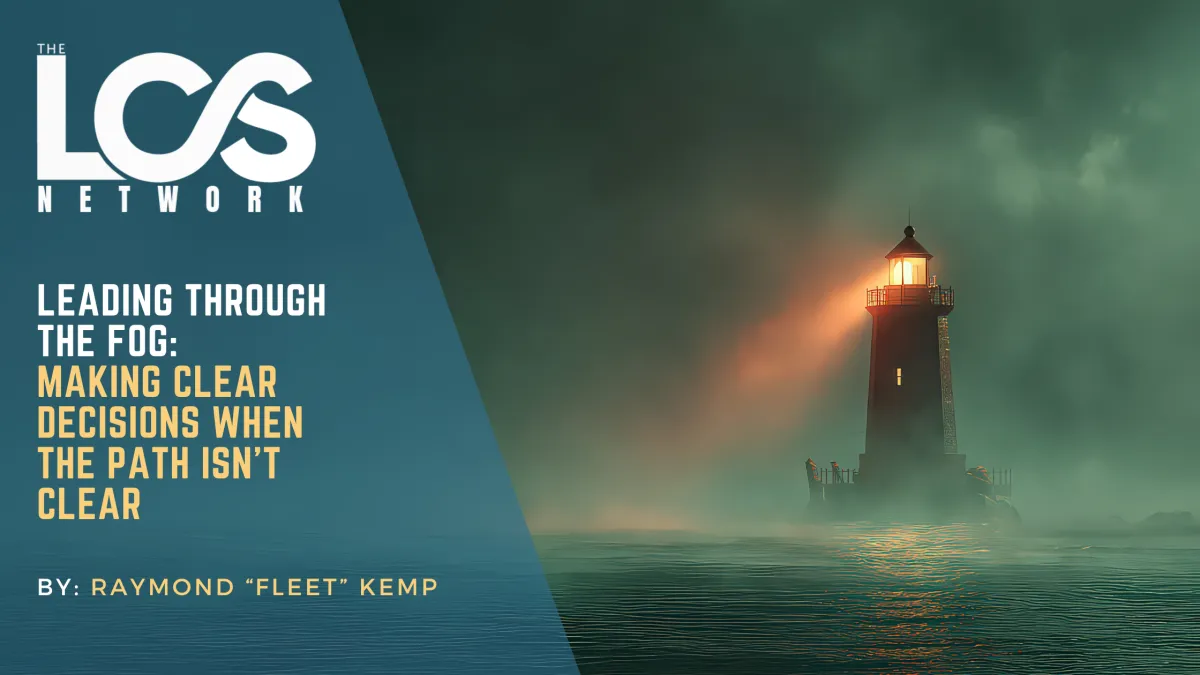
Leading Through the Fog
Leading Through the Fog: Making Clear Decisions When the Path Isn’t Clear.

Leadership has a way of humbling even the most experienced among us.
You can have decades of wins, strong instincts, and capable people around the table and still
find yourself facing uncertainty. Markets shift. People change. Strategies that once worked
no longer apply. Suddenly, the clarity leaders are expected to have feels just out of reach.
This reality is more common than most leaders admit.
Fog is not failure. Fog is not incompetence. Fog is evidence that you are moving forward into
conditions that cannot be fully mapped in advance.
If leadership required perfect visibility, very few organizations would ever grow. Progress
demands movement beyond what is already known. Yet many leaders hesitate, not because
they lack intelligence or experience, but because they believe certainty must come before
action. In practice, some of the most consequential decisions are made without it.
The absence of clarity does not remove the responsibility to lead.

Why Fog Feels More Dangerous Than It Is
Uncertainty triggers something primal. The human brain interprets the unknown as unsafe,
even when the actual risk is manageable. That instinct once protected us. In modern
leadership, it often works against us.
In business, this instinct shows up as delayed decisions, endless analysis, and persistent
search for more data. Leaders convince themselves they are being cautious when, in truth,
they are postponing discomfort. Reports are refined. Meetings are extended. Decisions are
deferred until conditions feel safer.
Meanwhile, teams notice the pause. Silence creates space, and that space fills quickly with
speculation and anxiety.
Waiting for clarity is still a decision. It is a decision to slow momentum, delay learning, and
allow circumstances to shape outcomes instead of leadership.
Fog does not slow organizations down. Hesitation does.

The Three Types of Fog Leaders Face
Not all fog is the same. Treating uncertainty as a single problem often leads to poor
decisions. In practice, leaders tend to face three distinct forms of fog.
Informational Fog
This is the most visible type. Data is incomplete, conflicting, or overwhelming. Dashboards
are full, reports are plentiful, yet insight is thin. The leadership move is discernment. What
must be known now, and what can be learned later? Forward movement requires deciding
with what is sufficient, not what is ideal.
Emotional Fog
This fog is quieter but more powerful. It shows up as fear of being wrong, fear of backlash,
and fear of letting people down. Leaders absorb the stress of their teams, their boards, and
their clients. This fog clouds judgment not because leaders are weak, but because they care.
The discipline is recognizing emotion without allowing it to dictate direction.
Identity Fog
This is the fog leaders are least likely to admit. Identity fog turns decisions into reflections
of self-worth. Questions about reputation, approval, and legacy quietly shape outcomes.
Navigating this fog requires separating who you are from the decisions you must make.
Not all fog comes from outside. Some of it comes from within.
A Practical Filter for Decision-Making
When clarity is limited, leaders do not need a crystal ball. They need a filter.
Four questions consistently cut through uncertainty:
What problem am I actually solving?
What decision moves us forward, even if it is imperfect?
What can I reverse later?
Who needs clarity from me right now?

Most decisions are doors, not walls. Momentum creates learning. Action generates feedback.
Even a provisional path forward is better than silence.
Leaders do not wait for the fog to lift. They move deliberately using the visibility they have.
Communicating Through the Fog
Silence breeds anxiety. When leaders disappear during uncertainty, teams assume the
worst. Transparency does not mean oversharing. It means being visible.
Effective leaders communicate what they know, acknowledge what they do not, and commit
to when they will provide an update.
Confidence is not pretending to have all the answers. Confidence is standing grounded while
working toward them.

The Lighthouse Mindset
Lighthouses do not remove storms. They do not calm the sea or change the weather. They
provide reference points.
Leadership works the same way.
Your role is not to eliminate uncertainty. Your role is to help people navigate through it. To
remain visible when conditions are difficult. To provide orientation when direction feels
unclear.
Clarity often arrives after commitment, not before.
The fog will pass. The real question is whether your leadership will still be standing, and
trusted, when it does.

Join Us Every 2nd Friday of the Month
11:30am-1pm