
News & Information
Articles

The Chemistry of Holiday Health
The Chemistry of Holiday Health
How Nutrients and Brain Chemistry Shape Mood By Dr. Natasha Mankins, PharmD FAAMM ABAAHP — Founder of Sultrosium Wellness
Mental health is often discussed in terms of stress, life challenges, or emotional patterns. While these factors matter, there is another major component that is frequently overlooked: your biochemistry — the chemical processes inside your body that power every thought, feeling, and response.
And let’s be honest: during the holidays, biochemistry feels especially relevant. Between Thanksgiving turkey naps, December sugar rushes, and New Year’s resolutions that fizzle faster than champagne bubbles, our brain chemistry is working overtime.
Why Brain Chemistry Matters
Your brain communicates through neurotransmitters, chemical messengers that control how you think and feel. They fall into two main categories:
Excitatory Neurotransmitters These stimulate the brain and enhance alertness and focus.
Glutamate supports learning, memory, and quick thinking. Balanced levels keep the brain sharp. Too high, and it’s like trying to relax at the office holiday party while the DJ cranks the volume to eleven.
Dopamine and norepinephrine help with motivation, energy, and concentration. Low levels often show up as sluggish thinking — the mental equivalent of trying to finish a year-end report after a Thanksgiving feast.
Inhibitory Neurotransmitters These calm the brain and support emotional stability.
GABA helps quiet racing thoughts, reduce tension, and promote relaxation.
Serotonin stabilizes mood, supports emotional resilience, and influences sleep. It’s produced from tryptophan — yes, the same amino acid found in turkey, though the post-Thanksgiving nap is more about carb overload than chemistry alone.
Melatonin is your sleep hormone, made from serotonin. When serotonin is low, sleep issues often follow — which might explain why wrapping gifts at midnight feels less like festive fun and more like origami for people who failed geometry.
Your mental health depends on balancing these “stimulating” and “calming” signals. Stress, inflammation, nutrient deficiencies, and gut health all influence this delicate chemistry.
Tryptophan: The Foundation for Serotonin
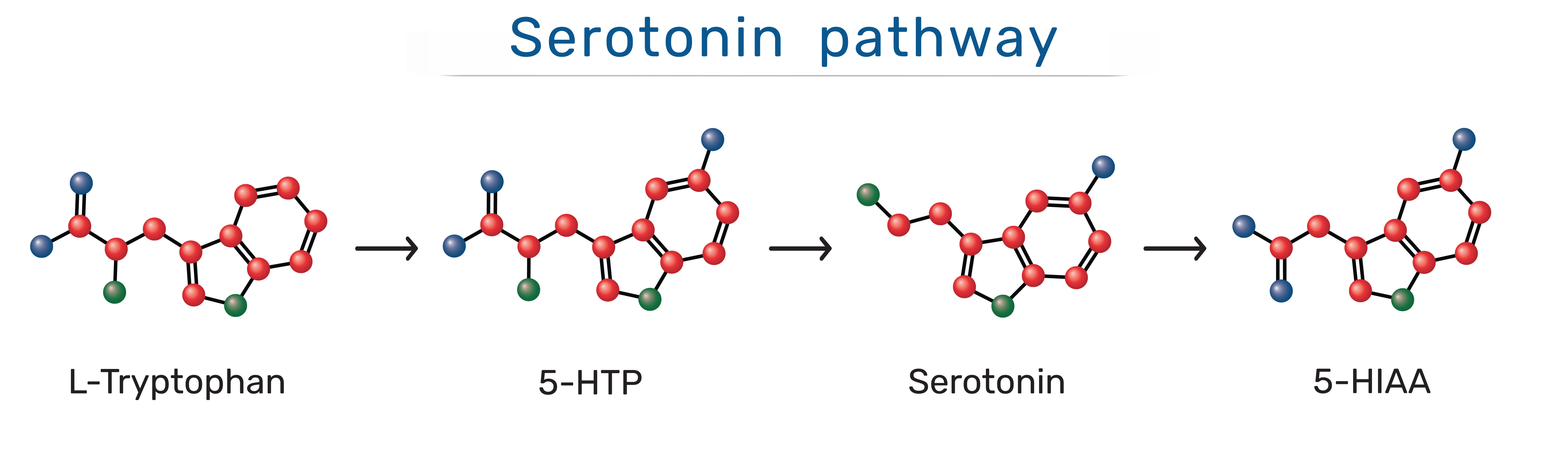
Tryptophan is an essential amino acid your body uses to make serotonin. Because the body cannot produce tryptophan on its own, adequate intake from food is required.
If tryptophan is low, or if the body lacks the nutrients needed to convert it into serotonin, symptoms can include irritability, low mood, trouble sleeping, or increased sensitivity to stress. Vitamin B6 plays a key role in this conversion.
Think of it this way: serotonin is your brain’s “holiday resilience” molecule. Without it, even minor stressors — like running out of tape while wrapping gifts — can feel like a crisis.
B Vitamins: Powerhouses for Neurotransmitter Production
Vitamins B6, B9 (folate), and B12 are foundational to neurotransmitter production.
Vitamin B6 helps convert tryptophan into serotonin.
Folate and B12 support methylation, a biochemical process required to build dopamine, norepinephrine, and other neurotransmitters.
Low B vitamin levels often present as fatigue, low motivation, mood swings, brain fog, or difficulty handling stress. These symptoms are frequently mistaken for depression, when in fact they may reflect inefficient biochemical processes.
In other words, if you’re feeling drained after the company holiday potluck, don’t just blame the fruitcake — your B vitamins might be running low too.
Vitamin D: Is it a Vitamin?
Although commonly labeled a vitamin, vitamin D functions in the body as a hormone. Your skin produces it from sunlight, and once activated, it influences mood, immune function, inflammation, and brain-cell communication.
Low vitamin D levels have been associated with depressed mood, decreased immune function, anxiety, brain fog, and increased stress sensitivity. Because deficiency is widespread, optimizing vitamin D is one of the most effective strategies for improving overall wellness.
Pairing vitamin D with vitamin K2 is important. K2 directs calcium into the bones and away from arteries, helping vitamin D work efficiently and safely.
And yes, stepping outside for sunlight during the holidays counts as self-care — even if it’s just to escape the chaos of relatives debating who makes the best green bean casserole.
Mental Health Is Not Just Emotional — It’s Chemistry
When someone experiences low mood, irritability, or brain fog, the cause is often attributed solely to stress or life circumstances. But many of these symptoms originate from metabolic imbalances and nutrient deficiencies, which impair neurotransmitter production.
A functional medicine approach explores:
nutrient levels
amino acid pathways
neurotransmitter balance
vitamin D optimization
gut health and inflammation
metabolic and mitochondrial function
lifestyle and stress patterns
When the body receives the nutrients it needs, mental and emotional wellness often improves dramatically.
Final Thoughts

Mental health is not just psychological — it is deeply biological. Your brain relies on precise chemistry to create calmness, clarity, focus, and emotional stability. Supporting these biochemical pathways provides a powerful, root-cause approach to improving mood.
And as we move from Thanksgiving through the New Year, remember:
Your brain chemistry is like your holiday calendar — it needs balance to avoid burnout.
Nutrients are the unsung heroes of resilience, helping you handle both deadlines and family dynamics.
Dopamine may get you excited about resolutions, but serotonin and B vitamins help you keep them past February.
Understanding your own chemistry gives you clarity on why you feel the way you do — and how to support yourself naturally. That way, you can enjoy the holidays with less stress, more energy, and maybe even spread some holiday cheer.

Join Us Every 2nd Friday of the Month
11:30am-1pm