
News & Information
Articles
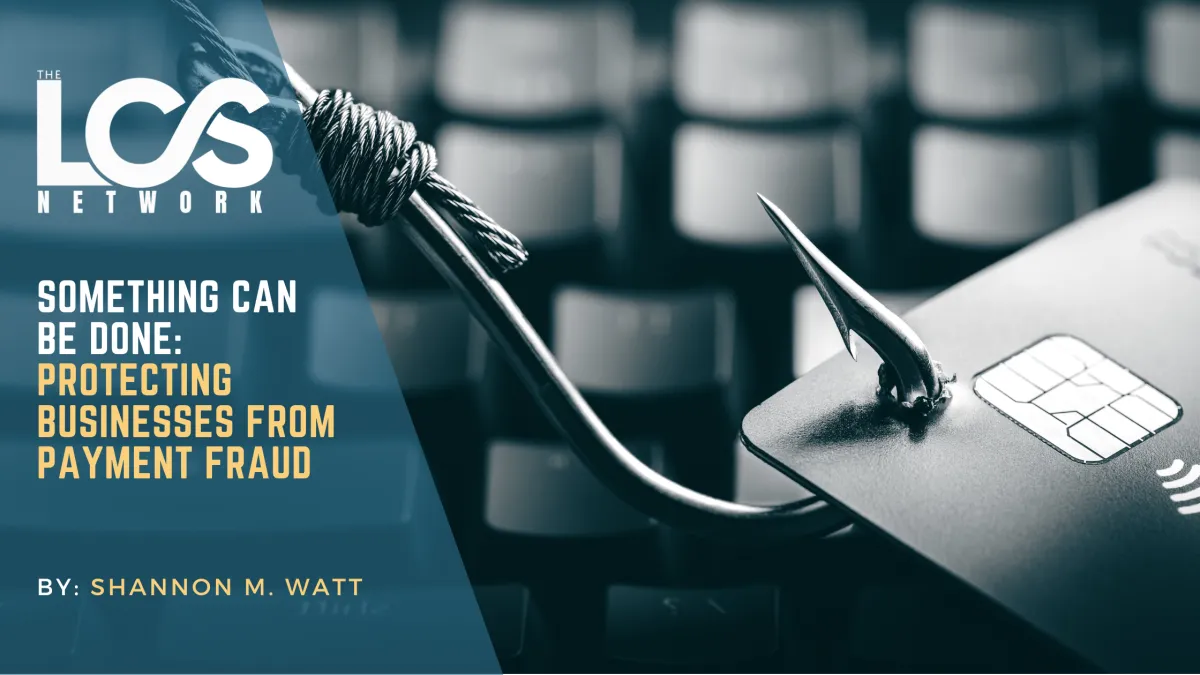
Something Can Be Done
Something Can Be Done: Protecting Businesses From Payment Fraud by Shannon M. Watt
In the face of a growing problem, it is easy to believe that nothing can be done.
Payment fraud has become increasingly sophisticated. Criminals now have access to tools that allow them to impersonate executives, imitate trusted vendors, compromise legitimate email accounts, and create convincing copies of familiar websites.
The size and complexity of the threat can leave business owners and employees feeling powerless. However, history—and the continued efforts of financial institutions, regulators, law enforcement agencies, and vigilant business leaders—tells a different story.
Something can be done.
Progress begins when people recognize a threat, share information, strengthen their procedures, and take practical steps to protect one another.

A Lesson in Connecting the Dots
The attacks of September 11, 2001, changed the United States forever. In addition to the unimaginable loss of life, the attacks exposed weaknesses in how critical information was collected, communicated, and understood.
One of the most enduring lessons was the importance of connecting the dots before a threat becomes a crisis.
In the weeks following the attacks, Congress passed the USA PATRIOT Act of 2001. Although much of the public conversation surrounding the legislation focused on national security and law enforcement, the act also strengthened safeguards throughout the American financial system.
Title III expanded measures intended to prevent, detect, and prosecute money laundering and terrorist financing. It also promoted greater cooperation among financial institutions, regulators, and law enforcement.
Several provisions had a lasting impact:
Section 314 encouraged information sharing to help identify suspicious financial activity.
Section 326 established minimum standards for verifying the identities of customers opening financial accounts.
Section 352 required financial institutions to establish anti-money-laundering programs that included internal controls, employee training, designated oversight, and independent testing.
Section 362 called for a secure communication network through which financial institutions could submit reports and receive alerts.
These measures were never a promise that every threat could be eliminated. They were proof that risks could be confronted through better information, stronger controls, and coordinated action.
That distinction matters.
We may not be able to prevent every criminal from attempting fraud, but we can make it far more difficult for them to succeed.

The Threat Is Still Growing
Payment fraud occurs when criminals make unauthorized payments from a business account or manipulate an employee into completing a transaction for them.
The most recent numbers demonstrate how widespread the problem has become.
According to the Association for Financial Professionals’ 2026 Payments Fraud and Control Survey, 76% of U.S. organizations experienced attempted or actual payment fraud in 2025.
Business email compromise affected 74% of organizations, while checks remained the payment method most frequently targeted by fraud. Fifty-eight percent of organizations reported check-related fraud activity.
The same survey found that only 17% of organizations currently use artificial intelligence to help combat payment fraud. Yet organizations using AI reported improvements in fraud reporting, deepfake detection, and real-time identification.
The FBI’s 2025 Internet Crime Report adds even more perspective. The agency received more than one million complaints of suspected internet crime during the year, with reported losses exceeding $20 billion.
These figures do not tell us that the fight is hopeless. They tell us that awareness and prevention must keep evolving alongside the threat.
The Most Common Threats to Businesses
Criminals do not always defeat a company’s technology. Frequently, they exploit human trust.
Their requests are designed to look ordinary. An employee may receive an email that appears to come from the company’s owner. A familiar vendor may seem to provide updated banking instructions. A link may lead to a website that looks nearly identical to a trusted login page.
The criminal does not always break through the front door. Sometimes, they convince someone inside to open it.

Business Email Compromise
Business email compromise occurs when a criminal sends a message that appears to come from a trusted colleague, executive, customer, vendor, or business partner.
In some cases, the attacker creates an email address that closely resembles a legitimate one. In others, a real email account has been compromised.
The message may include genuine names, contact information, company branding, previous conversations, or other details that make the request appear authentic. Once trust is established, the criminal may request sensitive information, initiate an unusual transaction, or redirect a payment to a fraudulent account.
These requests often create a sense of urgency because urgency discourages verification.
Phishing
Phishing attacks use fraudulent emails, text messages, advertisements, social media posts, and websites to obtain sensitive information.
A message may direct someone to a website that looks almost identical to a legitimate login page. Once the victim enters a username, password, credit card number, or other confidential information, the criminal can use it to access an account.
Technology makes these attacks easier to create, but human awareness can still stop them.
An employee who pauses before clicking a link or entering information may prevent an incident that no automated security system would have caught in time.
Vendor Impersonation
Vendor impersonation takes advantage of the trust that already exists within a business relationship.
A criminal may pose as a supplier or service provider and submit a fraudulent invoice. The attacker may also request that banking information be changed before the next payment is processed.
The email address may differ from the legitimate vendor’s address by only one letter or character. Because the vendor’s name and services are familiar, an employee may process the request without questioning it.
Trust should always remain part of a strong business relationship, but trust must be supported by a consistent verification process.

Six Actions That Make a Difference
There is no single tool that can eliminate payment fraud. Effective protection comes from combining awareness, communication, technology, and accountability.
1. Pick Up the Phone
When payment instructions change or a request feels unusual, call the person or company involved.
Use a trusted phone number already in your records. Do not rely on contact information included in the questionable message.
A two-minute phone call can prevent a devastating loss.
2. Train Every Employee
Fraud prevention should not be limited to the accounting department.
Every employee should know how to recognize suspicious messages, misleading links, fake invoices, unusual payment requests, and attempts to collect confidential information.
Criminal tactics continue to change, which means employee training cannot be treated as a one-time exercise.
3. Question Unusual Activity
Familiar names and professional-looking messages do not guarantee that a request is legitimate.
If a transaction is unusual, urgent, secretive, or inconsistent with normal procedures, take the time to investigate it.
A healthy question is not an inconvenience. It is a safeguard.
4. Separate Financial Responsibilities
Whenever possible, one person should not control an entire payment process.
Requiring a second employee to review or approve transactions creates another opportunity to catch errors, inconsistencies, and attempted fraud.
Internal accountability protects both the business and the employees responsible for handling its money.
5. Use the Tools Available Through Your Bank
Business owners should speak with their bank about the fraud-prevention tools available to them.
These tools may include approved payee lists, transaction alerts, payment limits, account controls, and additional approval requirements.
The goal is to identify suspicious activity as early as possible—and ideally before funds leave the account.
6. Require Multifactor Authentication
Passwords can be guessed, stolen, or exposed through phishing attacks.
Multifactor authentication adds another identity-verification step before someone can access an account or complete a transaction. It cannot prevent every attack, but it creates an important additional barrier.

Prevention Is Proof That Something Can Be Done
It would be unrealistic to suggest that legislation, technology, financial institutions, or internal controls can eliminate every financial threat.
They cannot.
However, it would be equally inaccurate to say that businesses are powerless.
The financial safeguards strengthened after September 11 demonstrate what can happen when institutions recognize vulnerabilities and take coordinated action. The fraud-prevention practices used today bring that same principle into the daily operations of every business.
Information can be shared.
Employees can be trained.
Transactions can be verified.
Responsibilities can be separated.
Technology can provide additional protection.
Suspicious activity can be questioned before money is lost.
The existence of a threat is not proof that nothing can be done. It is evidence that something must be done.
Businesses cannot control every criminal who attempts to deceive them. They can control how prepared their people are, how carefully payments are reviewed, and how quickly concerns are communicated.
The latest statistics are serious, but they are not a reason to surrender to the problem. They are a reason to become more informed, more disciplined, and more prepared.
That preparation can be the difference between an attempted fraud and a successful one.
The most important first step is believing that our actions matter.
Because they do.

Join Us Every 2nd Friday of the Month
11:30am-1pm